What Is Spellbook and Why It Matters
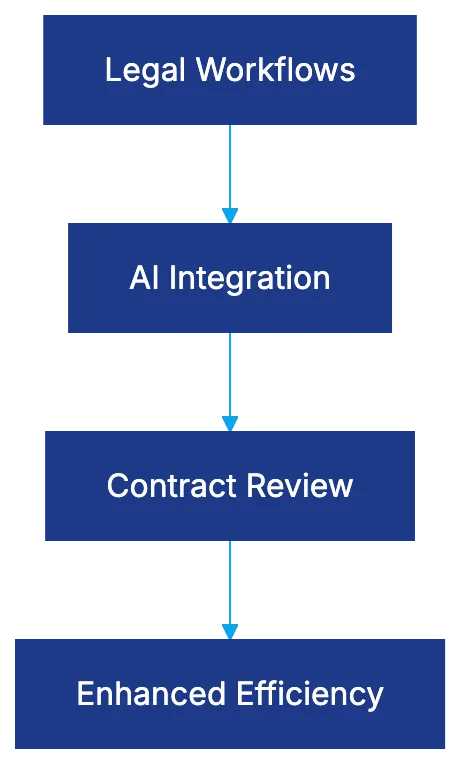
When Toronto-based Spellbook launched in 2022 as a generative AI copilot for lawyers, the legal industry was still figuring out AI contract drafting and GPT-5 legal technology. While other sectors rushed to implement AI, law firms moved cautiously due to concerns about accuracy and confidentiality. Spellbook addressed these concerns, offering a solution that integrates AI into legal workflows.
The platform has reviewed over 10 million contracts and serves more than 4,000 law firms globally. In April 2024, it secured $25 million in Series B funding led by Khosla Ventures, with Thomson Reuters Ventures investing, highlighting the growing interest in AI-driven legal solutions. This signals that contract review software has become essential. For legal professionals evaluating contract copilot technology, Spellbook is noteworthy.
Spellbook’s Position in Legal Tech:
The Technology Behind Spellbook’s Contract Copilot
Spellbook runs on GPT-4o, which introduced improvements in legal reasoning and context handling, enhancing the accuracy of contract analysis. Earlier models struggled with the subtle interpretation needed for contract analysis. GPT-5 handles these situations with better accuracy.
Spellbook doesn’t rely solely on the base model. It has specialized fine-tuning on GPT-4o, training on millions of contracts to understand legal drafting, clause structures, and jurisdictional variations, giving it an edge in understanding enforceable versus well-written clauses, as detailed in its official documentation.
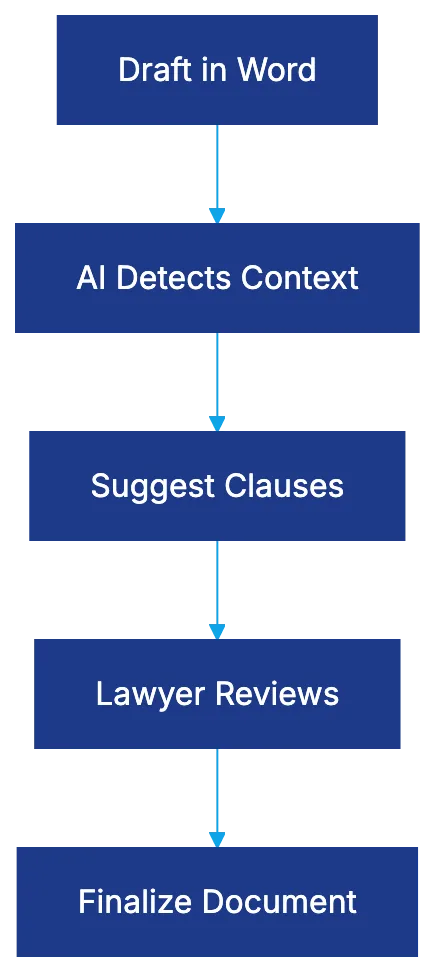
How Spellbook Processes Contracts:

The system integrates directly into Microsoft Word, where most legal drafting occurs. You’re not copying text into a separate web interface; AI suggestions appear in your sidebar, a crucial feature, as highlighted in Spellbook’s product overview.
Core Features That Actually Get Used
Spellbook’s features focus on practical tasks that consume associate time. The contract drafting assistance suggests relevant clauses based on what you’re writing.
When working on a nondisclosure agreement and typing a heading, the software efficiently surfaces applicable legal language. This exemplifies how Toronto legal tech is revolutionizing the sector.
Contract Drafting Workflow: