The Contract Management Gap for Small Legal Teams
Legal teams at small and mid-market companies face a frustrating reality. Manual processes using email and shared drives lead to version control nightmares and compliance headaches. Concord CLM entered this space in 2014 with a mission to offer full-featured, affordable contract management. Its pricing page lists plans from $499 per month, billed annually (as of October 2026), and with its Horizon AI features Concord positions itself as an accessible alternative to costly enterprise CLM systems. This platform is worth examining for legal teams managing contracts without enterprise budgets.
Company Background and Market Position
CLM Platform Accessibility Gap:
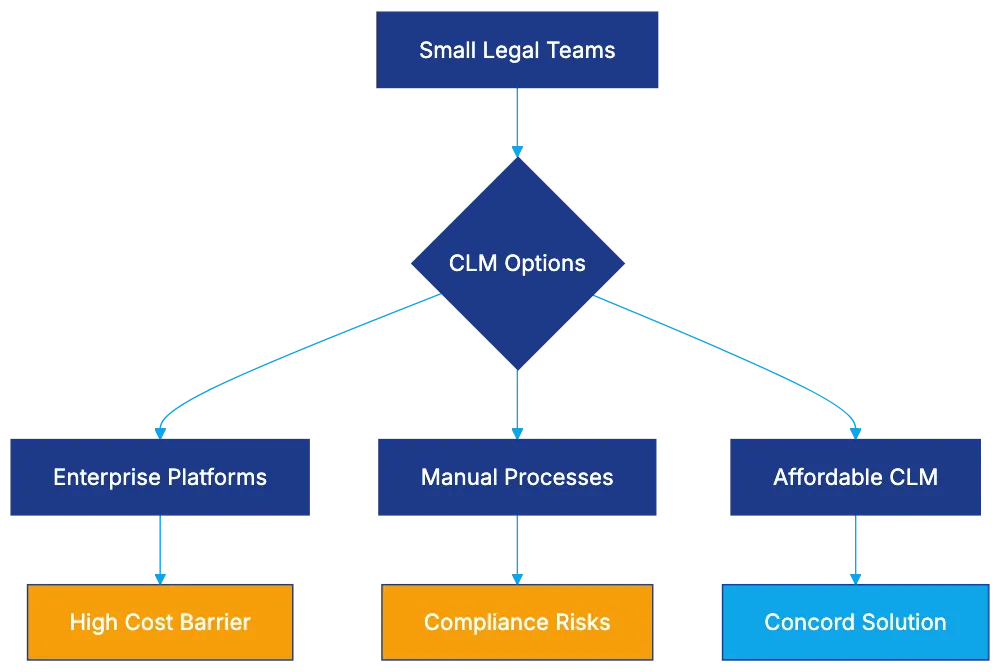
Since 2014, Concord focused on the SMB contract management and mid-market segments, offering standardized processes that work out of the box instead of targeting Fortune 500 companies. By publishing costs on their website, Concord remains transparent, aiding legal departments with fixed budgets. The platform is ideal for startups and mid-market companies tired of piecing together separate tools.
Horizon: AI Search and Reporting
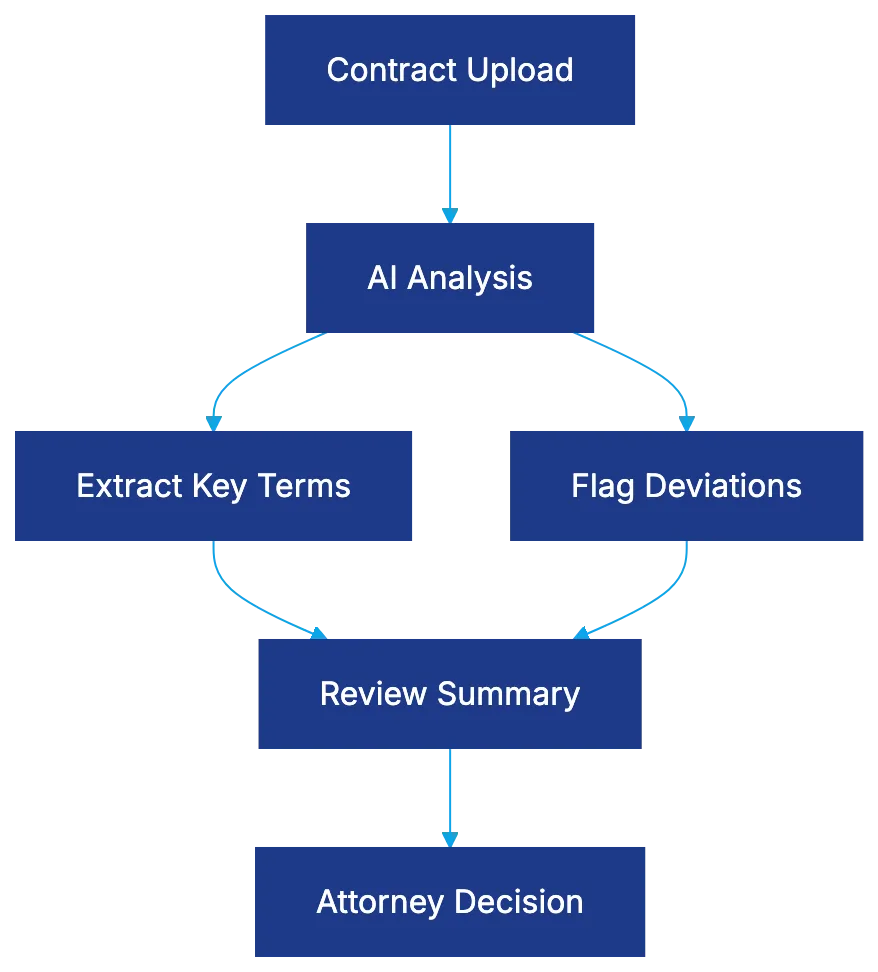
Concord launched Horizon in November 2025. The launch included AI Search, a Portfolio Copilot, AI Reporting, a new Inbox and access through the Model Context Protocol (MCP). Concord’s pricing page also lists AI Copilot and extraction in its entry plan.
Horizon doesn’t replace attorney judgment on complex issues but excels with routine contracts. For startups and SMBs, this describes most of their contract volume.
Core Contract Management Features
Contract Management Workflow:

Beyond AI capabilities, Concord offers standard CLM functionality like centralized storage with metadata tagging and full-text search, crucial for companies storing contracts in email or shared drives. Drafting workflows integrate templates, approval routing, and collaboration, reducing back-and-forth. Concord’s native e-signature capabilities eliminate the need for third-party solutions.
Basic analytics offer visibility into contract volume, cycle times, and renewals. For SMB legal operations, this represents a significant upgrade.
Pricing Structure and Total Cost Considerations
As of October 2026, Concord’s pricing page lists three plans, billed annually: Essentials at $499 per month, Business at $899 per month and Enterprise at $1,299 per month. Each includes 5 users, with a monthly fee for each extra user. Concord’s transparency aids budgeting without sales calls. Essentials includes AI Copilot and extraction, unlimited e-signatures and unlimited documents; the open API is part of the Enterprise plan.
For startups or mid-market companies, the cost is significant but justifiable, especially against poor contract management costs. Concord’s quick deployment is crucial when teams lack resources for lengthy implementations.
Target Use Cases: Startups and SMB Legal Operations
Concord caters to specific profiles. Startups face contract chaos scaling from founder-led contracting to their first legal hire. Concord provides structure without requiring dedicated expertise. Established small businesses and mid-market companies bumping against makeshift solutions also benefit as Concord consolidates tools into a singular affordable CLM solution.
Organizations needing extensive customization or deep integration with systems may quickly outgrow Concord.
Contract Collaboration and Workflow Management
For contract managers using email, Concord’s features address pain points. Stakeholders work on the same contract instance, eliminating coordination overhead and version control errors. Approval workflows define routing based on contract type and value, reducing manual tracking.
Horizon Contract Analysis Process:
 Concord integrates with business systems like Salesforce to enhance data flow, though large ERP or sophisticated system integrations are limited.
Implementation Considerations and Limitations
Implementing Concord requires minimal change management, with legal teams setting it up without consultants. The typical setup involves existing contract migration, template setup, configuring workflows, and training stakeholders, usually taking weeks. Concord handles thousands of contracts effectively, though feature depth may limit rapidly growing organizations.
Comparing Concord to Alternative Approaches
Affordable CLM alternatives include manual processes and point solutions, which require managing multiple systems. Enterprise CLM platforms offer deeper functionality at higher costs. Other SMB-focused platforms compete with Concord, but Horizon differentiates it for those valuing AI assistance.
Bottom Line
Concord makes contract lifecycle management accessible to organizations unable to justify enterprise expenses. Its pricing, transparency, and quick setup remove traditional barriers for startups and SMBs. The platform suits those with straightforward needs. Consider growth trajectories for future capability requirements. For many, Concord offers a practical solution for immediate challenges.
- Company Background and Market Position
- Horizon: AI Search and Reporting
- Core Contract Management Features
- Pricing Structure and Total Cost Considerations
- Target Use Cases: Startups and SMB Legal Operations
- Contract Collaboration and Workflow Management
- Implementation Considerations and Limitations
- Comparing Concord to Alternative Approaches
- Bottom Line