
Review of Spellbook AI for Legal Professionals
Table of Contents
- Introduction Legal professionals spend countless hours drafting and reviewing contracts, pulling them away from higher-value work. Spellbook AI addresses this issue, operating directly within Microsoft Word as a native add-in trained on billions of legal texts. This review assesses whether it accelerates contract work without losing accuracy. We discuss its integration, legal-specific training, AI drafting, review capabilities, pricing, and comparisons to alternatives like LegalOn, Harvey, and ChatGPT.
- What Makes Spellbook Different: Legal-Specific Training Spellbook AI’s training data sets it apart from general-purpose AI tools. While platforms like ChatGPT train on broad content, Spellbook is trained on billions of lines of legal text, including contracts, enabling it to use appropriate legal terminology and recognize standard clause categories with less prompting, reducing (but not eliminating) the hallucination risks of general AI models. Source This training enables it to use appropriate legal terminology and recognize standard clause categories with less prompting, reducing (but not eliminating) the hallucination risks of general AI models. Legal professionals must still review AI-generated content for accuracy, as professional judgment remains crucial.
- Microsoft Word Integration: Working Where Lawyers Already Work Spellbook AI Core Capabilities:
- AI Drafting Capabilities: From Suggestions to Full Clauses AI Training Comparison:
- Review Features: Issue Identification and Risk Flagging Spellbook functions as a review tool, identifying issues in contracts, such as deviations from market standards and potential risks. It summarizes key provisions, speeding up contract reviews. Risk flagging identifies disadvantageous terms, aiding in initial reviews. This helps junior staff identify issues requiring senior attention.
- Spellbook Pricing: Per-Seat Model and Cost Considerations Spellbook pricing is per-seat, offering discounts for small firms and requiring custom quotes for enterprises. Pricing includes unlimited use, AI updates, and support. It’s more expensive than general AI tools but is competitive in the legal AI space. ROI is dependent on contract volume. It suits transactional practices with steady contract flow.
- How Spellbook Compares to Alternative Legal AI Tools LegalOn excels in contract review and playbook enforcement, while Spellbook assists more with drafting and improvements. Harvey offers enterprise solutions with broader capabilities, requiring budget that smaller firms can’t justify. Spellbook’s legal-specific training and Word integration provide advantages over general AI tools like ChatGPT, though many professionals use both for varied tasks. Source
- User Experience: Accuracy, Time Savings, and Limitations Legal AI Tool Positioning:
- Implementation Considerations and Best Practices Successful setup requires more than installation. Policies on AI content usage and client consent, security measures, and training on effective use are critical. Vendor diligence ensures data handling is understood. Users must grasp the tool’s strengths, prompting techniques, and critical review habits for best results.
- Bottom Line Spellbook AI adds value for legal professionals with regular contract duties. The Microsoft Word legal add-in reduces workflow friction, and legal-specific training improves suggestions. Cost is justified by time savings in high-volume practices. However, it’s not a substitute for legal expertise, as human verification remains necessary to mitigate the risk of AI errors. Spellbook allows lawyers to focus on substantive judgment, automating repetitive tasks—an ideal AI implementation.
- Introduction Legal professionals spend countless hours drafting and reviewing contracts, pulling them away from higher-value work. Spellbook AI addresses this issue, operating directly within Microsoft Word as a native add-in trained on billions of legal texts. This review assesses whether it accelerates contract work without losing accuracy. We discuss its integration, legal-specific training, AI drafting, review capabilities, pricing, and comparisons to alternatives like LegalOn, Harvey, and ChatGPT.
- What Makes Spellbook Different: Legal-Specific Training Spellbook AI’s training data sets it apart from general-purpose AI tools. While platforms like ChatGPT train on broad content, Spellbook is trained on billions of lines of legal text, including contracts, enabling it to use appropriate legal terminology and recognize standard clause categories with less prompting, reducing (but not eliminating) the hallucination risks of general AI models. Source This training enables it to use appropriate legal terminology and recognize standard clause categories with less prompting, reducing (but not eliminating) the hallucination risks of general AI models. Legal professionals must still review AI-generated content for accuracy, as professional judgment remains crucial.
- Microsoft Word Integration: Working Where Lawyers Already Work Spellbook AI Core Capabilities:
- AI Drafting Capabilities: From Suggestions to Full Clauses AI Training Comparison:
- Review Features: Issue Identification and Risk Flagging Spellbook functions as a review tool, identifying issues in contracts, such as deviations from market standards and potential risks. It summarizes key provisions, speeding up contract reviews. Risk flagging identifies disadvantageous terms, aiding in initial reviews. This helps junior staff identify issues requiring senior attention.
- Spellbook Pricing: Per-Seat Model and Cost Considerations Spellbook pricing is per-seat, offering discounts for small firms and requiring custom quotes for enterprises. Pricing includes unlimited use, AI updates, and support. It’s more expensive than general AI tools but is competitive in the legal AI space. ROI is dependent on contract volume. It suits transactional practices with steady contract flow.
- How Spellbook Compares to Alternative Legal AI Tools LegalOn excels in contract review and playbook enforcement, while Spellbook assists more with drafting and improvements. Harvey offers enterprise solutions with broader capabilities, requiring budget that smaller firms can’t justify. Spellbook’s legal-specific training and Word integration provide advantages over general AI tools like ChatGPT, though many professionals use both for varied tasks. Source
- User Experience: Accuracy, Time Savings, and Limitations Legal AI Tool Positioning:
- Implementation Considerations and Best Practices Successful setup requires more than installation. Policies on AI content usage and client consent, security measures, and training on effective use are critical. Vendor diligence ensures data handling is understood. Users must grasp the tool’s strengths, prompting techniques, and critical review habits for best results.
- Bottom Line Spellbook AI adds value for legal professionals with regular contract duties. The Microsoft Word legal add-in reduces workflow friction, and legal-specific training improves suggestions. Cost is justified by time savings in high-volume practices. However, it’s not a substitute for legal expertise, as human verification remains necessary to mitigate the risk of AI errors. Spellbook allows lawyers to focus on substantive judgment, automating repetitive tasks—an ideal AI implementation.
Introduction Legal professionals spend countless hours drafting and reviewing contracts, pulling them away from higher-value work. Spellbook AI addresses this issue, operating directly within Microsoft Word as a native add-in trained on billions of legal texts. This review assesses whether it accelerates contract work without losing accuracy. We discuss its integration, legal-specific training, AI drafting, review capabilities, pricing, and comparisons to alternatives like LegalOn, Harvey, and ChatGPT.
What Makes Spellbook Different: Legal-Specific Training Spellbook AI’s training data sets it apart from general-purpose AI tools. While platforms like ChatGPT train on broad content, Spellbook is trained on billions of lines of legal text, including contracts, enabling it to use appropriate legal terminology and recognize standard clause categories with less prompting, reducing (but not eliminating) the hallucination risks of general AI models. Source This training enables it to use appropriate legal terminology and recognize standard clause categories with less prompting, reducing (but not eliminating) the hallucination risks of general AI models. Legal professionals must still review AI-generated content for accuracy, as professional judgment remains crucial.
Microsoft Word Integration: Working Where Lawyers Already Work Spellbook AI Core Capabilities:
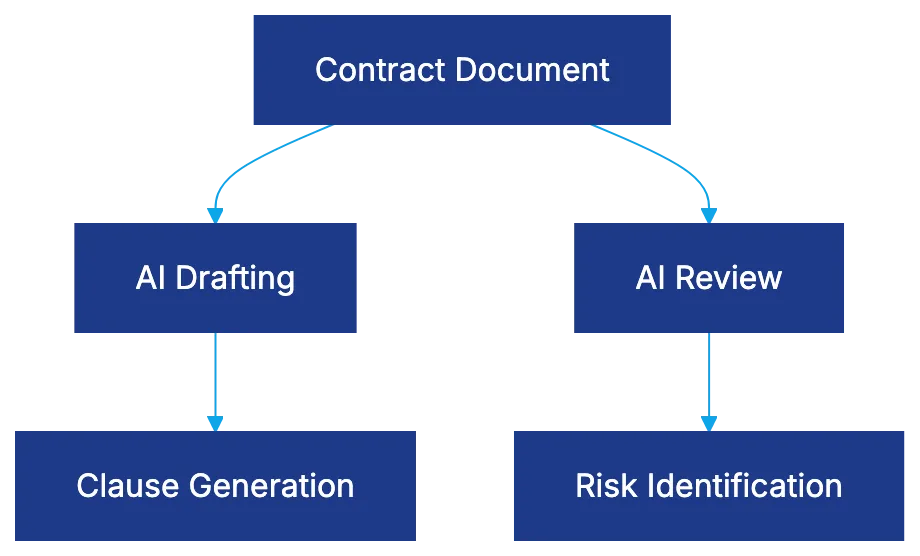
Spellbook AI offers seamless integration with Microsoft Word as a sidebar, removing the need to switch applications. Source This integration allows for real-time assistance without disrupting workflow. Users can receive suggestions, identify issues, or generate language alternatives directly in Word. This approach adds capabilities without replacing familiar workflows. Setup takes minutes, respecting how legal work is conducted.
AI Drafting Capabilities: From Suggestions to Full Clauses AI Training Comparison:
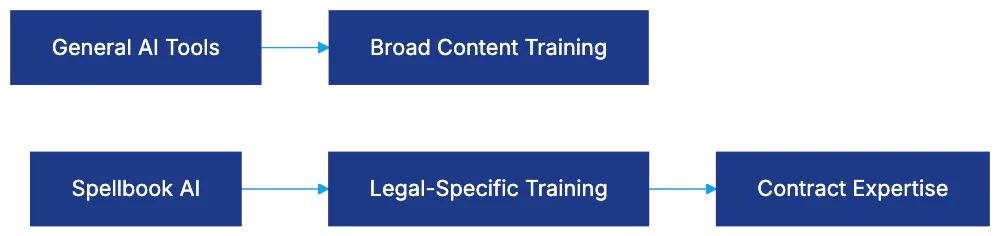
Spellbook offers several modes of AI drafting. It provides inline suggestions with legal-specific intelligence and responds to direct requests for language adjustments. It can generate clauses from scratch, serving as solid drafts that generally need customization. This feature saves significant time in high-volume contract work.
Review Features: Issue Identification and Risk Flagging Spellbook functions as a review tool, identifying issues in contracts, such as deviations from market standards and potential risks. It summarizes key provisions, speeding up contract reviews. Risk flagging identifies disadvantageous terms, aiding in initial reviews. This helps junior staff identify issues requiring senior attention.
Spellbook Pricing: Per-Seat Model and Cost Considerations Spellbook pricing is per-seat, offering discounts for small firms and requiring custom quotes for enterprises. Pricing includes unlimited use, AI updates, and support. It’s more expensive than general AI tools but is competitive in the legal AI space. ROI is dependent on contract volume. It suits transactional practices with steady contract flow.
How Spellbook Compares to Alternative Legal AI Tools LegalOn excels in contract review and playbook enforcement, while Spellbook assists more with drafting and improvements. Harvey offers enterprise solutions with broader capabilities, requiring budget that smaller firms can’t justify. Spellbook’s legal-specific training and Word integration provide advantages over general AI tools like ChatGPT, though many professionals use both for varied tasks. Source
User Experience: Accuracy, Time Savings, and Limitations Legal AI Tool Positioning:

User feedback highlights time savings as a key benefit, with first drafts completed 30-40% faster. While Spellbook’s legal training provides relevant suggestions, human review is essential due to occasional errors. It excels with common contract types. For specialized structures, its suggestions may be less reliable.
Implementation Considerations and Best Practices Successful setup requires more than installation. Policies on AI content usage and client consent, security measures, and training on effective use are critical. Vendor diligence ensures data handling is understood. Users must grasp the tool’s strengths, prompting techniques, and critical review habits for best results.
Bottom Line Spellbook AI adds value for legal professionals with regular contract duties. The Microsoft Word legal add-in reduces workflow friction, and legal-specific training improves suggestions. Cost is justified by time savings in high-volume practices. However, it’s not a substitute for legal expertise, as human verification remains necessary to mitigate the risk of AI errors. Spellbook allows lawyers to focus on substantive judgment, automating repetitive tasks—an ideal AI implementation.
Frequently Asked Questions
How does Spellbook AI improve my contract drafting process?
Spellbook AI accelerates the drafting process by providing inline suggestions, generating full clauses from scratch, and allowing for quick adjustments. This facilitates faster creation of contract drafts, typically completing tasks 30-40% quicker than manual efforts. However, users should still review AI-generated content for accuracy.
What security measures does Spellbook AI implement to protect sensitive data?
Spellbook AI emphasizes vendor diligence and requires users to ensure data handling measures are understood. Organizations should establish policies on the use of AI content, including client consent, to safeguard sensitive information. It's also crucial to train staff on the secure and effective use of the tool.
Can Spellbook AI be integrated into existing workflows easily?
Yes, Spellbook AI integrates seamlessly within Microsoft Word, allowing users to access its functions without switching applications. The setup process is designed to be completed quickly, ensuring minimal disruption to established workflows.
What types of contracts is Spellbook AI most effective for?
Spellbook AI excels in drafting and reviewing standard contract types but may be less reliable for specialized structures. It performs best in environments with high-volume contract work, making it an ideal choice for transactional practices.
Is Spellbook AI suitable for small law firms?
Yes, Spellbook AI offers a per-seat pricing model with discounts for small firms, making it accessible for their needs. The cost can be justified by the time savings achieved in document handling and contract workflows.
How does Spellbook AI compare to other legal AI tools?
Spellbook AI focuses on drafting and enhancing contracts, whereas tools like LegalOn specialize in contract review and playbook enforcement. Although Spellbook is generally more competitive in legal-specific contexts, some professionals may still complement it with general AI tools for a broader range of tasks.
Do I still need to review AI-generated content?
Yes, human review remains essential when using Spellbook AI. While the tool provides relevant legal suggestions, occasional errors can occur, and professional judgment is necessary to ensure the accuracy and appropriateness of the content produced.
Related Articles

Harvey AI Review: Advanced Legal AI for Law Firms
Explore how Harvey AI transforms legal workflows, offering tailored solutions and superior performance for large law firms.

Understanding E-Discovery Software in 2026
Explore how AI-powered e-discovery software transforms legal document review with efficiency and accuracy.

LegalOn Review: AI Contract Review Simplified
Explore LegalOn's AI contract review features, accuracy, and seamless Microsoft Word integration for legal professionals.