
Understanding Sirion CLM in Contract Management
Table of Contents
- What Sets Sirion CLM Apart from Legal-First Platforms
- Sirion AI Capabilities and Machine Learning Features
- Procurement-Specific Features
- Analytics and Reporting Capabilities
- Enterprise Deployment and Implementation
- Sirion Pricing Structure
- ROI Metrics and Customer Outcomes
- Who Should Consider Sirion CLM
- Comparing Sirion to Alternatives
- User Experience and Implementation Challenges
- Bottom Line
- What Sets Sirion CLM Apart from Legal-First Platforms
- Sirion AI Capabilities and Machine Learning Features
- Procurement-Specific Features
- Analytics and Reporting Capabilities
- Enterprise Deployment and Implementation
- Sirion Pricing Structure
- ROI Metrics and Customer Outcomes
- Who Should Consider Sirion CLM
- Comparing Sirion to Alternatives
- User Experience and Implementation Challenges
- Bottom Line
Understanding Sirion CLM in Today’s Contract Management Landscape
Contract lifecycle management tools have evolved rapidly, but not all CLM platforms serve the same needs. Sirion CLM stands out at the intersection of legal operations and procurement management, emphasizing supplier contract oversight. For organizations managing many vendor relationships, this focus is crucial. Sirion combines AI-powered contract intelligence with procurement-specific workflows, addressing vendor performance tracking, compliance monitoring, and spend analysis.
What Sets Sirion CLM Apart from Legal-First Platforms
Sirion CLM Platform Focus:
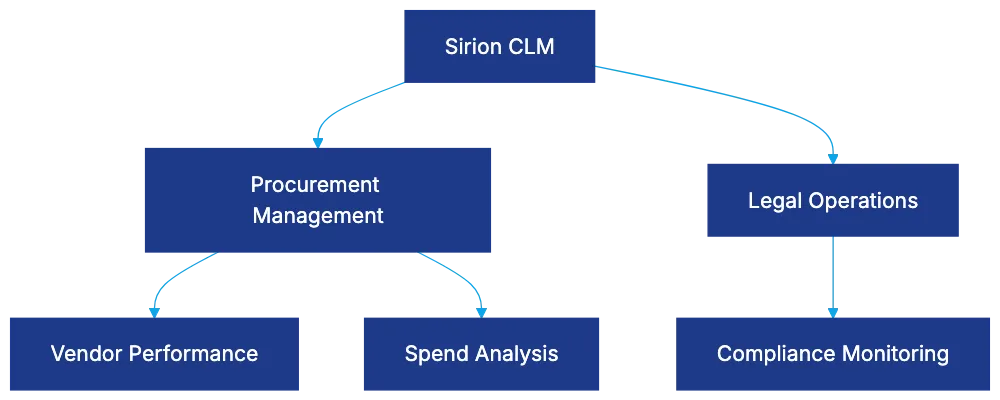
Sirion’s architecture distinguishes it from competitors like Ironclad or LinkSquares. The platform treats procurement contracts as strategic assets requiring ongoing management. Key features focus on tracking supplier performance metrics, compliance monitoring, and procurement analytics, benefiting organizations where procurement and legal teams equally manage contracts.
Sirion AI Capabilities and Machine Learning Features
Sirion AI uses machine learning for contract data extraction and analysis, employing natural language processing to extract key terms, obligations, dates, and financial provisions during ingestion. Accuracy improves as the system learns from user corrections, but initial deployment demands substantial training data. A mid-market manufacturing company spent three months refining templates to achieve over 90% accuracy in agreements. AI insights identify patterns like favorable payment terms and problematic clauses, presenting deviations through dashboards. Highly customized agreements may require more manual intervention.
AI Contract Processing Flow:

Procurement-Specific Features
Sirion’s vendor performance tracking module differentiates it from legal-centric competitors. Procurement teams can define performance metrics linked to contract provisions and track vendor delivery accordingly. For instance, a logistics company used Sirion to monitor on-time delivery and invoice accuracy, automatically generating scorecards derived from management data. Compliance monitoring extends past basic reminders, helping organizations track requirements like ISO certifications or insurance. Spend analysis aggregates contract data to identify consolidation opportunities and negotiate discounts.
Analytics and Reporting Capabilities
Sirion’s analytics engine operates at individual contract, supplier portfolio, and enterprise-wide levels. Contract-level dashboards show obligation timelines, milestone tracking, and financial summaries. Supplier portfolio views aggregate data to reveal total spend, performance trends, and risk exposure. For example, a technology services firm standardized payment terms across contracts, improving cash flows. Comprehensive risk dashboards synthesize various data sources, prioritizing vendor relationship management. Deep analytics require strong data governance.
Enterprise Deployment and Implementation
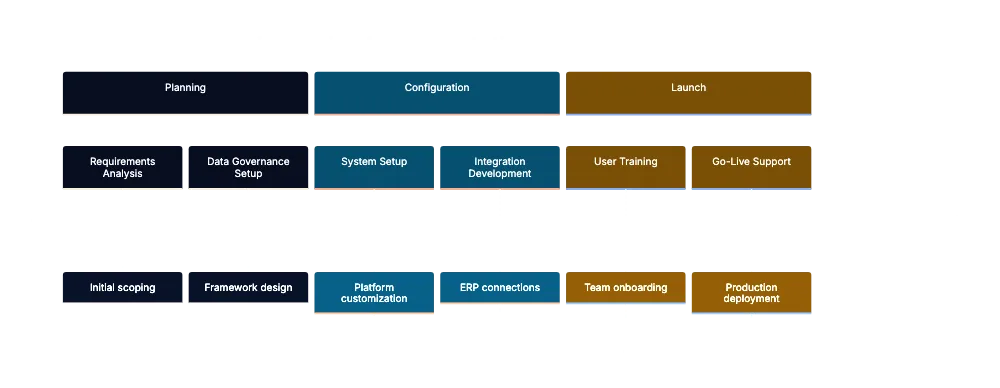
Typically taking four to nine months, Sirion’s deployment time varies with organizational complexity. It supports global deployments with multi-language capabilities, though localization varies. The platform accommodates complex structures with role-based permissions and approval workflows. Integration capabilities include pre-built connectors for major ERP systems, though custom integrations may require API development. The professional services model offers varying support levels, with enterprise customers receiving dedicated setup teams.
Sirion Pricing Structure
Enterprise Deployment Timeline:
 Sirion pricing follows an enterprise model with annual licensing fees based on contract volume, user count, and module selection. Transparent pricing isn’t publicly available. Costs can start in the low six figures for mid-market deployments and scale higher for larger enterprises. Beyond licensing, setup costs represent a significant investment, with ongoing administration and user training expenses. The pricing model suits organizations where procurement savings justify the investment.
ROI Metrics and Customer Outcomes
Sirion case studies highlight procurement savings as a primary ROI driver. A global technology company reported $12 million in annual savings through contract standardization and supplier consolidation insights. A healthcare organization reduced violations by 67% using automated compliance tracking. Cycle time reduction is noted; baseline metrics are essential for measuring benefits effectively. Organizations should focus on metrics they can measure within their operations when assessing vendor-reported ROI claims.
Who Should Consider Sirion CLM
Sirion suits organizations where procurement and legal teams jointly manage vendor contracts as strategic assets. It’s ideal for companies with substantial supplier portfolios, large procurement spends, complex compliance requirements, global operations needing multi-language support, and who are mature enough to utilize analytics for decision-making. It may not fit legal departments managing contracts without significant procurement components or smaller organizations with limited IT resources.
Comparing Sirion to Alternatives
Sirion’s competitive landscape includes Icertis, Ironclad, and Coupa. Icertis offers broad CLM capabilities, while Sirion provides deeper procurement-specific functionality. Ironclad suits legal operations with workflow automation appealing to in-house counsel. Coupa integrates contract management within its procurement platform but lacks Sirion’s advanced contract intelligence.
User Experience and Implementation Challenges
User reviews reveal consistent themes in Sirion’s strengths and challenges. Positive feedback highlights supplier-centric dashboards and obligation tracking features. However, users note the interface requires substantial training, and AI extraction accuracy needs ongoing correction. Integration projects and customer support experiences vary, with enterprise customers often receiving better service. Success with Sirion requires investment in setup and change management.
Bottom Line
Sirion CLM is valuable for organizations viewing vendor contracts as strategic procurement assets needing active management beyond legal review. It addresses pain points overlooked by legal-centric tools, offering supplier performance tracking, compliance monitoring, and procurement analytics. Although AI capabilities require initial training, they provide insights aiding in better sourcing decisions. Sirion is an enterprise-level commitment with significant costs and effort, justified for organizations with complex procurement needs.
Frequently asked questions
What types of organizations benefit most from Sirion CLM?
Organizations that have complex vendor relationships and significant procurement spends are ideal candidates for Sirion CLM. It’s particularly useful for companies where both procurement and legal teams manage contracts jointly, as well as those with strict compliance requirements and global operations.
How long does it take to implement Sirion CLM?
The implementation timeline for Sirion CLM typically ranges from four to nine months, depending on the complexity of the organization. Factors such as the number of users, contract volume, and specific requirements can influence the duration of the setup process.
What are the key features of Sirion CLM that differentiate it from other platforms?
Sirion CLM distinguishes itself with its focus on procurement-specific features, emphasizing vendor performance tracking, compliance monitoring, and spend analysis. The platform’s AI capabilities enhance contract insights, allowing for robust data-driven decision-making.
How does Sirion CLM handle compliance monitoring?
Sirion CLM aids in compliance monitoring by tracking essential requirements beyond simple reminders, such as ISO certifications or insurance policies. This proactive approach ensures that organizations remain compliant with critical standards and regulations.
What pricing models does Sirion CLM operate under?
Sirion CLM follows an enterprise licensing model based on contract volume, user count, and selected modules, with costs typically starting in the low six figures for mid-market clients. Additional setup costs and ongoing training expenses can significantly impact the total investment required for implementation.
How can organizations measure ROI after implementing Sirion CLM?
To measure ROI effectively, organizations should focus on specific metrics that reflect their operations, such as procurement savings or compliance violation reductions. Case studies indicate significant savings and efficiency improvements, serving as benchmarks for assessing performance and justifying the investment.
What challenges do users face when adopting Sirion CLM?
Users often report challenges with the platform’s interface, which requires substantial training to navigate effectively. Additionally, ensuring the accuracy of AI-generated data extraction necessitates ongoing corrections and involvement from users, particularly during initial deployment stages.