
Robin AI: Transforming Legal AI with Human Verification
Table of Contents
- What Makes Robin AI Different From Other Legal AI Platforms
- How Robin AI Contract Review Actually Works
- Robin AI Pricing Structure and Cost Considerations
- Accuracy and Quality Control in the Hybrid Model
- Security and Confidentiality With Human-in-the-Loop Review
- Comparing Robin AI to Pure Software Alternatives
- Best Use Cases for Robin AI Legal Services
- Limitations and Situations Where Robin AI May Not Fit
- Bottom Line
- What Makes Robin AI Different From Other Legal AI Platforms
- How Robin AI Contract Review Actually Works
- Robin AI Pricing Structure and Cost Considerations
- Accuracy and Quality Control in the Hybrid Model
- Security and Confidentiality With Human-in-the-Loop Review
- Comparing Robin AI to Pure Software Alternatives
- Best Use Cases for Robin AI Legal Services
- Limitations and Situations Where Robin AI May Not Fit
- Bottom Line
What Makes Robin AI Different From Other Legal AI Platforms
The legal AI market seeks to transform contract review with platforms often categorized as self-managed or autonomous AI tools. Robin AI distinguishes itself by merging AI-driven contract analysis with human lawyer verification.
Robin AI uses a hybrid service model where AI first analyzes contracts, followed by a review from Robin’s legal team before delivering results. This approach reduces AI errors, posing fewer risks to general counsels compared to standalone AI platforms.
Robin AI Service Model Comparison:
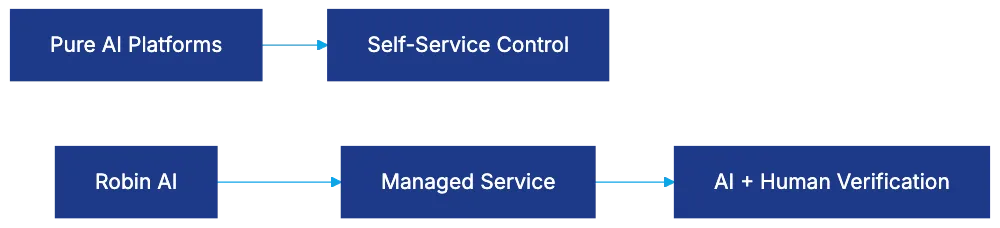
For law firms and legal departments, the key consideration is whether human verification suits your workflow and expertise better than direct AI control.
How Robin AI Contract Review Actually Works
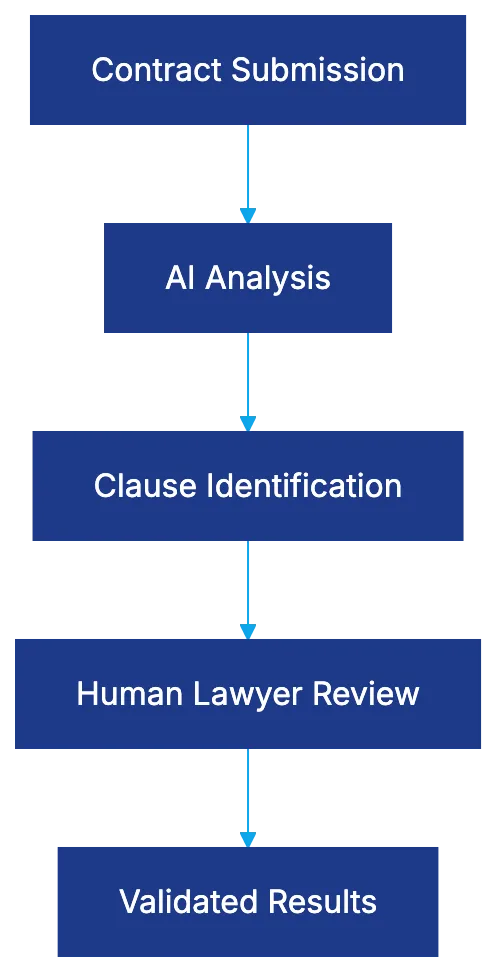
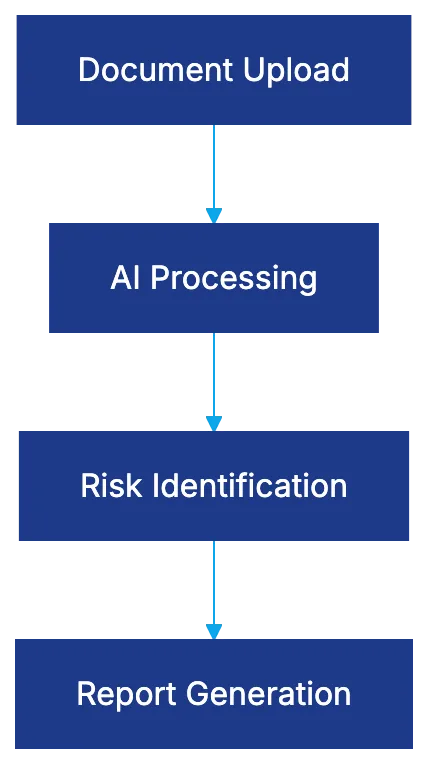
Robin AI’s contract review employs a submission and turnaround method rather than real-time software access. Contracts are submitted, initially analyzed by AI, and then reviewed by Robin’s legal team.
The AI component handles contract ingestion, clause identification, and highlights deviations. Post-AI analysis, Robin’s lawyers verify and validate AI findings, ensuring accuracy and context.
Reviews typically complete in 24-48 hours, with expedited options for tighter deadlines, offering a balance between traditional counsel speed and AI-only platforms’ immediacy.
This managed service reduces your team’s management burden, though with less direct process control than self-service AI tools.
Robin AI Contract Review Process:
Robin AI Pricing Structure and Cost Considerations
Robin AI diverges from the subscription model with per-contract pricing, scaling with actual volume, beneficial for legal departments with variable contract activity.
Costs depend on contract complexity and urgency, with decreased rates for volume commitments. Robin’s model often proves less costly than traditional counsel but a detailed discussion with their sales team is necessary.
For high-volume teams, subscription models might be cheaper, but per-contract pricing suits organizations processing fewer contracts, given Robin’s human verification addition.
Pricing reflects its service nature, not software, shifting budgeting from IT to legal service expenses.
Accuracy and Quality Control in the Hybrid Model
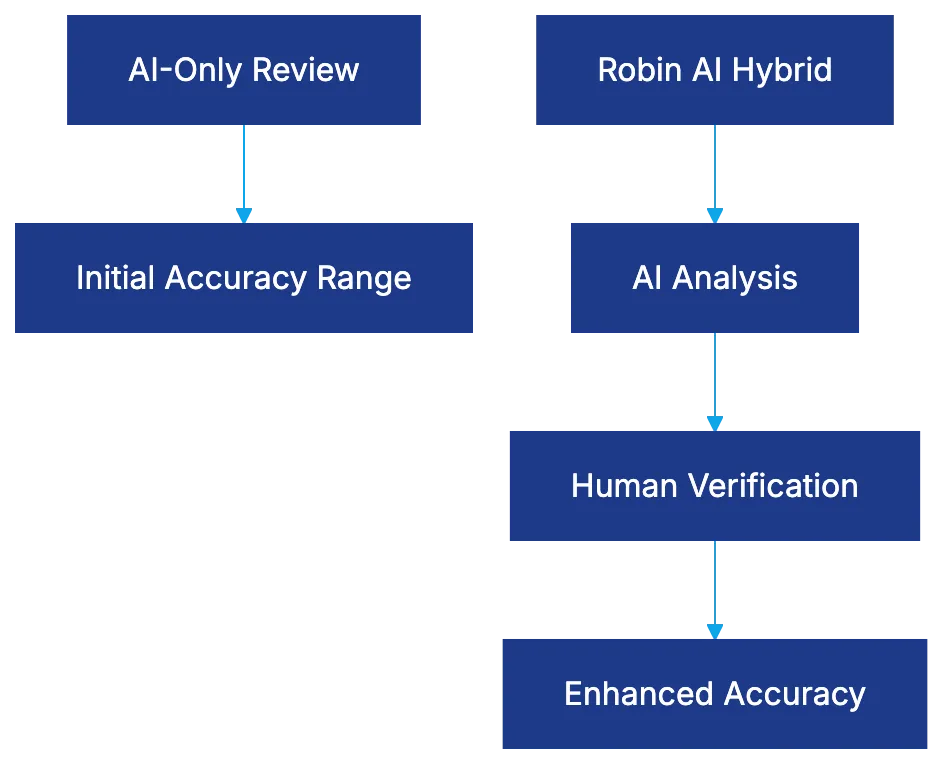
Robin AI’s accuracy combines AI precision with human verification. AI-only review accuracy is 85-95%, but errors in legal documents carry risks.
Robin’s lawyers review AI outcomes, much like a junior associate’s work, adding context and validating conclusions for higher accuracy than pure AI, especially beneficial for organizations lacking contract expertise.
Human verification addresses AI’s contextual challenges, offering more accurate analysis respective to industry norms.
Accuracy Comparison:
Security and Confidentiality With Human-in-the-Loop Review
Third-party contract reviews raise security concerns, which Robin mitigates through confidentiality agreements and ethical duties akin to outside counsel, plus technical safeguards like encryption and access controls.
Robin allows customized handling for sensitive matters, offering options to address security concerns, though reliance on human review introduces different risk profiles compared to software-only solutions.
Comparing Robin AI to Pure Software Alternatives
Legal AI platforms like LegalOn and Spellbook offer direct AI analysis. These platforms require internal expertise, flexibility, and volume handling, charging subscription fees with user access for economic efficiency.
Robin AI provides managed service with verification, a fit for those lacking AI expertise or preferring human verification over direct AI control.
Consideration involves what AI should achieve: Robin offers reliable reviews without managing AI tools, while pure software solutions allow broader functionality.
Best Use Cases for Robin AI Legal Services
Robin AI benefits mid-sized legal departments needing professional-grade reviews without AI expertise or additional hires, law firms handling overflow, and accuracy-focused contexts where human verification is crucial.
Its pricing model suits variable volume situations, like seasonal businesses, offering flexibility over fixed costs.
Limitations and Situations Where Robin AI May Not Fit
High-volume teams might prefer cost-effective software platforms. Immediate results from AI-only platforms appeal to those needing urgent contract analysis.
Robin’s focus doesn’t support internal AI capability building, and reliance on its team could lead to capacity issues during busy times.
Specialized contracts may require traditional counsel expertise beyond Robin’s generalist review.
Existing relationships with outside counsel could resist switching to Robin’s model due to familiarity benefits.
Bottom Line
Robin AI offers a managed service blending AI analysis with human verification, mitigating AI accuracy concerns while trading off direct control and immediacy of pure software solutions.
It’s suitable for teams seeking AI-driven benefits without AI management, benefiting from variable volume pricing and accuracy over speed. Pricing reflects its service-centric nature, with considerations of control and capacity constraints versus pure AI tools.
Choosing Robin AI revolves around whether to manage AI tools directly or purchase AI-based contract review services. Each path addresses different organizational needs through distinct strengths and trade-offs.
Frequently Asked Questions
How long does it take for Robin AI to review a contract?
Reviews typically take between 24 to 48 hours, depending on the contract's complexity and urgency. Expedited options are available for tighter deadlines, balancing speed with thoroughness.
What factors affect the cost of using Robin AI?
The pricing structure is based on the complexity and urgency of each contract, with decreased rates available for higher volume commitments. Unlike traditional subscription models, costs scale with actual usage, making it suitable for organizations with variable contract activity.
Can Robin AI handle sensitive contracts securely?
Yes, Robin AI implements confidentiality agreements and ethical duties, akin to those of outside counsel. Additionally, they utilize technical safeguards such as encryption and access controls to protect sensitive information during the review process.
What are the advantages of human verification in the Robin AI model?
Human verification enhances accuracy by adding context to AI findings, similar to how a junior associate would review work. This approach improves understanding of industry norms and mitigates the risks associated with misinterpretation of legal documents that can occur with pure AI analysis.
Who is the ideal user for Robin AI's services?
Robin AI is best suited for mid-sized legal departments needing thorough contract reviews without requiring in-house AI expertise, as well as law firms managing overflow work. It's particularly beneficial in accuracy-focused scenarios where human oversight is critical.
What types of contracts may not be suitable for Robin AI?
Contracts that require specialized legal expertise beyond Robin's generalist review may not be ideal for their service. Additionally, organizations with existing relationships with traditional counsel might find it challenging to switch due to the familiarity and trust built over time.
How does Robin AI compare to software-only legal AI platforms?
Unlike software-only alternatives that require users to manage AI tools directly, Robin AI offers a managed service with human verification. This makes it a better fit for users who prefer reliability and support over the flexibility and immediacy provided by pure software solutions.
Related Articles
E-Discovery Platform Selection Guide for 2026
Discover the top e-discovery platforms with AI, pricing insights, and TAR capabilities for efficient litigation management.
Top AI Tools Transforming M&A Due Diligence
Explore the leading AI tools shaping M&A due diligence, enhancing efficiency, accuracy, and security in document processing.

AI Legal Writing Tools: Capabilities and Risks
Explore the evolving role of AI legal writing tools, their benefits, and the risks of inaccuracies and hallucinations.