
Legitt AI Review: Contract Automation for SMBs
Table of Contents
- Introduction
- Contract Automation Core Features
- AI Capabilities and Technology Approach
- Legitt Pricing Structure and Market Positioning
- Target Market and Ideal Use Cases
- User Experience and Interface Design
- Competitive Positioning in the CLM Market
- Specific Strengths and Competitive Advantages
- Limitations and Areas Where Competitors Excel
- Security, Compliance, and Data Handling
- Bottom Line
- Introduction
- Contract Automation Core Features
- AI Capabilities and Technology Approach
- Legitt Pricing Structure and Market Positioning
- Target Market and Ideal Use Cases
- User Experience and Interface Design
- Competitive Positioning in the CLM Market
- Specific Strengths and Competitive Advantages
- Limitations and Areas Where Competitors Excel
- Security, Compliance, and Data Handling
- Bottom Line
Introduction
Contract lifecycle management platforms are multiplying faster than most legal departments can evaluate them. Legitt AI positions itself as an accessible contract automation solution with AI-powered drafting and template management. The platform targets small to mid-sized businesses looking for simplified contract workflows without enterprise-level complexity or pricing. This Legitt AI review examines what the platform delivers, where it excels, and whether its features justify consideration. We’ll cover contract automation capabilities, AI functionality, pricing structure, competitive positioning, and practical limitations based on vendor documentation and user feedback.
Contract Automation Core Features
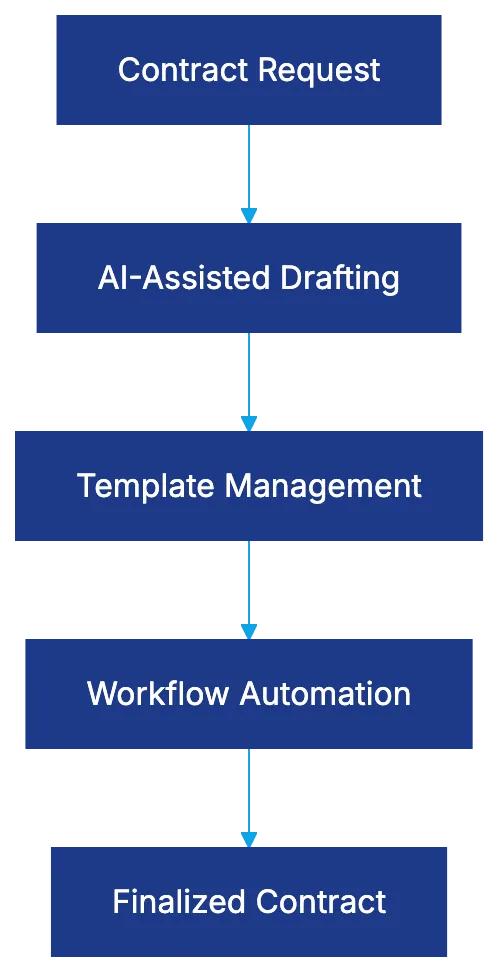
Legitt’s contract automation centers on three primary capabilities: AI-assisted drafting, template management, and workflow automation. The drafting assistant reduces contract creation time by suggesting clause language based on contract type and parameters you specify, akin to Spellbook, which integrates AI-driven drafting suggestions directly into Microsoft Word.
-
AI-Assisted Drafting: Users select a contract category (NDAs, employment agreements, service contracts) and answer questions about terms, parties, and conditions. The system generates a first draft incorporating those specifications.
-
Template Management: Maintains a centralized repository of approved contract templates. Legal teams can create templates with variable fields, approval requirements, and conditional clauses. This standardization reduces the need for legal review on routine agreements while maintaining consistency.
-
Workflow Automation: Handles routing, approvals, and notifications. You configure rules for contract review specific to contract types, set approval thresholds based on contract value or risk level, and automate reminders. This system tracks contract status, creating visibility into bottlenecks and cycle times.
The platform includes basic version control and tracking changes. Multiple stakeholders can review contracts, though the collaboration features are more basic than platforms like Ironclad or Juro.
Contract Automation Core Components:
AI Capabilities and Technology Approach
Legitt’s AI contract drafting focuses on drafting assistance, data extraction, and basic risk analysis. Drafting assistance uses natural language processing to generate appropriate clause language.
-
Data Extraction: Upload existing contracts for the system to identify key terms, dates, obligations, and parties. Accuracy varies.
-
Risk Analysis: Flags potentially problematic clauses based on predefined criteria, like unlimited liability provisions or missing indemnification clauses.
The AI technology uses rule-based logic and machine learning models (not large language models like GPT-4) making it more predictable for legal teams.
Legitt Pricing Structure and Market Positioning
Legitt pricing follows a tiered subscription model based on features and user count. The vendor doesn’t publish specific pricing online, requiring request quotes. Pricing is positioned below enterprise CLM solutions like Icertis or Agiloft but comparable to other mid-market options.
AI Processing Pipeline:

-
Plan Tiers: Multiple plan tiers start with a basic plan and move through mid-tier plans adding workflow automation and AI features.
-
User-Based Pricing: Charges per-user pricing, which can become expensive with many users across departments.
Setup fees vary, with levels of setup support based on the chosen plan tier.
Target Market and Ideal Use Cases
Legitt AI targets small to mid-sized businesses, legal departments with limited technical resources, and those new to contract management software.
-
High Volume Contract Types: Useful for businesses executing many NDAs, vendor agreements, or employment contracts monthly.
-
Professional Services Firms: These usually need clean contracts without compliance complexity, aligning with Legitt’s offerings.
-
Growing Businesses: Smaller legal departments will find Legitt’s feature set appropriate.
User Experience and Interface Design
Legitt’s interface follows contemporary SaaS design with a dashboard showing contract status and key metrics. The design ensures users familiar with modern web apps can navigate easily.
-
Contract Creation Workflow: Guides users through questions or form fields to populate template variables, accessible to non-lawyers.
-
Search and Retrieval: Allows contract search by party name, contract type, dates, or custom metadata, though lacks sophisticated enterprise filtering.
-
Mobile Access: Available via responsive web design for mobile devices but better on desktops.
-
Combining Capabilities: Integrates with tools like Salesforce, Microsoft 365, and Google Workspace, essential for most organizations.
Competitive Positioning in the CLM Market
Legitt positions itself as a more accessible alternative to enterprise leaders like Ironclad or Icertis.
-
Simplicity vs. Power: Legitt’s simpler approach may appeal to those wanting contract management without complex setups.
-
AI-Focused Newcomers: Compared to newcomers like Evisort or LinkSquares, Legitt offers less sophisticated AI capabilities but easier setup.
Legitt differentiates by packaging CLM functionality into a straightforward setup for organizations moving beyond email and file shares.
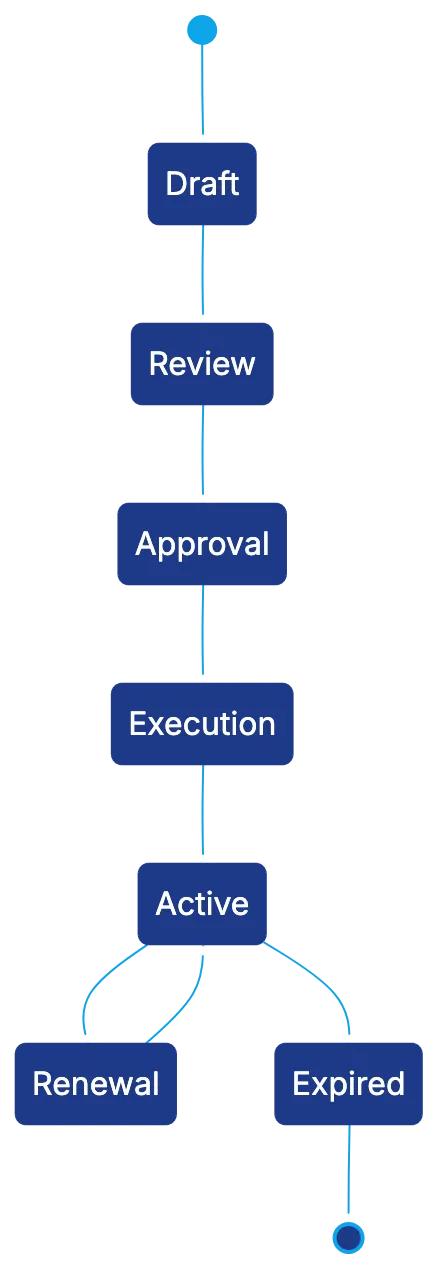
Contract Lifecycle Workflow:
Specific Strengths and Competitive Advantages
Legitt lowers the entry barrier for contract lifecycle management.
-
Template-Based Approach: Allows legal teams to encode standard positions, reducing drafting time.
-
Shorter Setup Timelines: Implementations for straightforward use cases may complete within weeks.
-
Pricing Accessibility: Accessible pricing for small to mid-sized legal departments expands CLM adoption.
-
Customer Support: More accessible support enhances the user experience.
Limitations and Areas Where Competitors Excel
Legitt’s accessibility has tradeoffs in power and sophistication.
-
Complex Contract Portfolios: Organizations with complex negotiation workflows may find Legitt limiting.
-
Narrow Combining Environment: Limited connectors might be a drawback for specialized systems.
-
AI Capabilities: Useful for basic use cases but less sophisticated than AI-first platforms.
-
Scalability and Compliance: Limited compliance tracking may pose questions for rapid-growth organizations or regulated industries.
Security, Compliance, and Data Handling
Legitt includes standard security requirements like data encryption and role-based access controls. More detailed security certifications require direct vendor engagement.
-
Data Residency Options: Confirm available options for organizations with data sovereignty requirements.
-
User Access Controls: Define roles and permissions, though granularity may lack compliance frameworks.
-
Vendor Lock-In: Consider data export capabilities to prevent vendor dependency.
Bottom Line
Legitt AI offers an entry point for moving beyond email-based contract management through meaningful automation in template management, workflow routing, and AI-assisted drafting. Suitable for small to mid-sized legal departments, Legitt’s contract automation approach fits organizations with standardized contract types and straightforward approval workflows. Organizations should engage the vendor directly for a cost assessment, understanding pricing scalability as contract volumes grow.
Frequently asked questions
What types of contracts can I create using Legitt AI?
Legitt AI supports a variety of contract types, including NDAs, employment agreements, and service contracts. Users can select a specific category and provide relevant details to generate a tailored contract draft efficiently.
How does Legitt AI ensure the accuracy of the contracts generated?
Legitt AI employs natural language processing to assist in drafting by suggesting appropriate clauses based on user-defined parameters. Additionally, the platform offers data extraction capabilities, which allow users to upload existing contracts for analysis of key terms and obligations.
What is the pricing structure like for Legitt AI?
Legitt follows a tiered subscription model, offering different plans that vary by features and user count. Specific pricing details are not publicly available, and interested users must request quotes from the vendor.
Is Legitt AI suitable for large enterprises or only small to mid-sized businesses?
Legitt AI primarily targets small to mid-sized businesses and legal departments with limited resources or those new to contract management software. While it may not be tailored for complex enterprise needs, it offers a simpler solution for standard contract workflows.
Can Legitt AI integrate with other software tools?
Yes, Legitt AI integrates with commonly used tools such as Salesforce, Microsoft 365, and Google Workspace. This integration facilitates a more streamlined workflow for organizations already using these platforms.
What are some limitations of using Legitt AI?
While Legitt AI is accessible and user-friendly, it may not be suitable for organizations with complex contract negotiation needs or specialized systems due to limited connectors. Additionally, its AI capabilities are more basic compared to competitors focused solely on sophisticated AI solutions.
What security measures does Legitt AI offer for data protection?
Legitt AI includes standard security features such as data encryption and role-based access controls. For organizations with specific compliance requirements, it is advisable to engage with the vendor for detailed information regarding security certifications and data residency options.