
Ironclad's Unique Approach to Contract Management
Table of Contents
- What Sets Ironclad Apart in Contract Management
- Core Ironclad CLM Capabilities
- Workflow Designer
- Repository Features
- Clickwrap Capability
- AI Assist Powered by Jurist AI
- Contract Review and Clause Extraction
- Practical Benefits
- Ecosystem and Technical Architecture
- Integration Flexibility
- Developer Hub
- Workflow Automation Without IT Dependency
- Building Workflows
- Ironclad Pricing and Cost Considerations
- Total Cost of Ownership
- Competitive Pricing Evaluation
- Implementation Timeline and Resource Requirements
- Resource Allocation
- Target Market and Best Use Cases
- Ideal Fit for Salesforce-centric Organizations
- Competitor Comparison: Ironclad vs. Alternatives
- Icertis, Juro, Evisort, and DocuSign CLM
- Selection Based on Priorities
- Developer Resources and Technical Extensibility
- API and Webhooks
- Bottom Line
- What Sets Ironclad Apart in Contract Management
- Core Ironclad CLM Capabilities
- Workflow Designer
- Repository Features
- Clickwrap Capability
- AI Assist Powered by Jurist AI
- Contract Review and Clause Extraction
- Practical Benefits
- Ecosystem and Technical Architecture
- Integration Flexibility
- Developer Hub
- Workflow Automation Without IT Dependency
- Building Workflows
- Ironclad Pricing and Cost Considerations
- Total Cost of Ownership
- Competitive Pricing Evaluation
- Implementation Timeline and Resource Requirements
- Resource Allocation
- Target Market and Best Use Cases
- Ideal Fit for Salesforce-centric Organizations
- Competitor Comparison: Ironclad vs. Alternatives
- Icertis, Juro, Evisort, and DocuSign CLM
- Selection Based on Priorities
- Developer Resources and Technical Extensibility
- API and Webhooks
- Bottom Line
What Sets Ironclad Apart in Contract Management
Ironclad, a Hackett Group Digital World Class CLM Provider, offers a contract lifecycle management platform for legal teams managing numerous contracts at growing and enterprise companies. This review examines Ironclad’s technical sophistication and user accessibility. The no-code Workflow Designer allows teams to create complex approval chains without IT support. Ironclad integrates with over 8,000 applications via Zapier and syncs well with Salesforce. Legal professionals should assess Ironclad’s strengths and trade-offs beyond feature comparisons.
Core Ironclad CLM Capabilities
Ironclad Contract Lifecycle Management Overview:
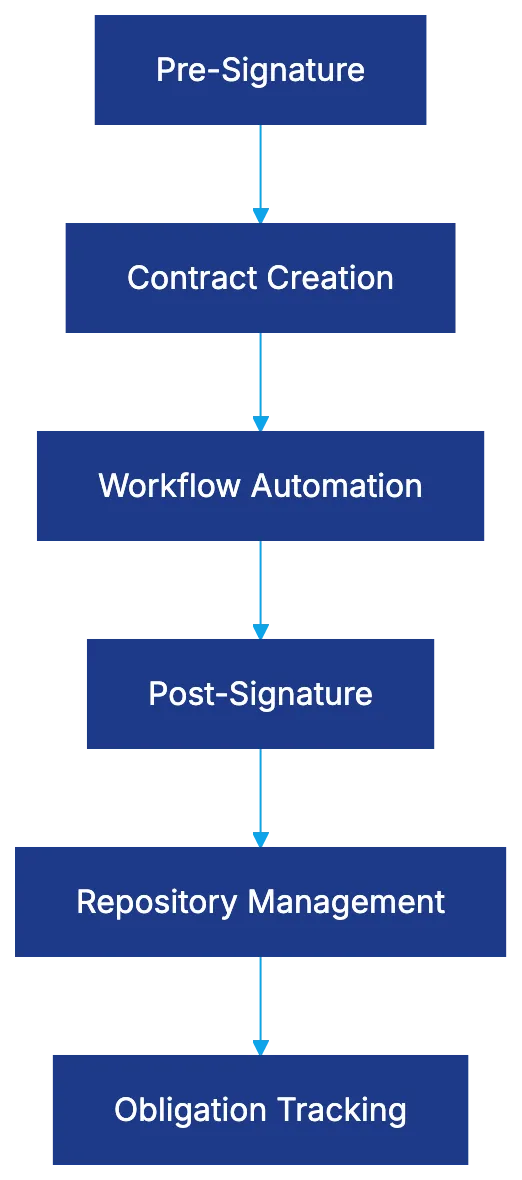
Ironclad manages the entire contract lifecycle, offering a unified system for pre-signature workflow automation, post-signature repository management, and obligation tracking. Unlike solutions focusing on one phase, Ironclad provides comprehensive coverage.
Workflow Designer
A key feature is the Workflow Designer, allowing legal operations to set up conditional approval routes without coding. Routine NDAs might be directed straight to the counterparty, while high-value agreements trigger reviews from finance, legal, and executives, matching existing processes.
Repository Features
Ironclad’s repository provides centralized storage with metadata tagging, full-text search, and the ability to map relationships between contracts. This function highlights vendor relationships, crucial for renewals or vendor risk assessments. Search capabilities extend beyond basic text matching to understand contract structures, locating clauses with varied phrasing.
Clickwrap Capability
Clickwrap capabilities support mass acceptance scenarios. Ironclad handles terms of service, privacy policies, and employee acknowledgments, besides negotiated B2B contracts. This reduces vendor sprawl by tracking high-volume acceptances alongside complex agreements.
AI Assist Powered by Jurist AI
Workflow Designer Approval Process:
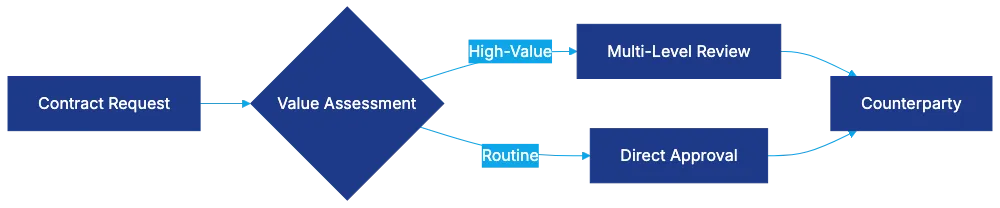
Ironclad’s AI Assist, using Anthropic’s Claude models, aids in contract analysis, clause suggestions, and redlining. Jurist AI is trained on contract language for legal use, not just general AI tools.
Contract Review and Clause Extraction
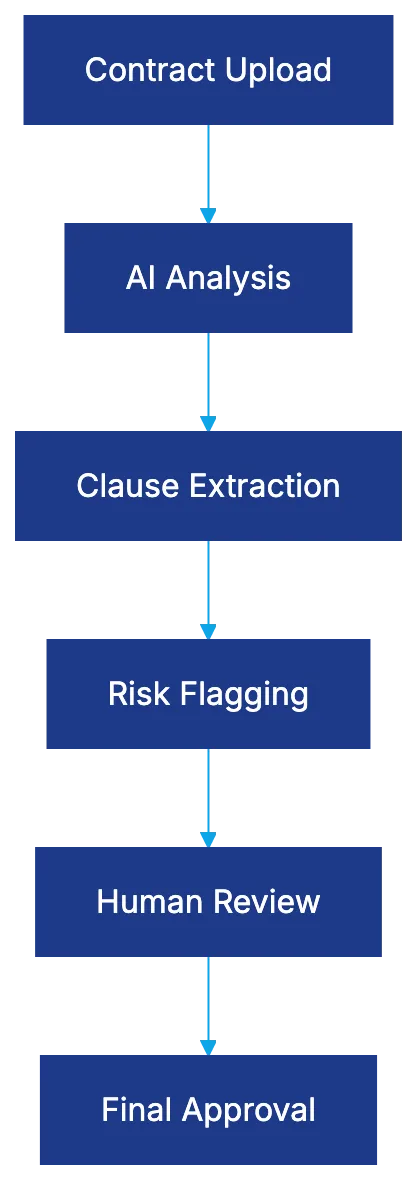
AI Assist flags problematic clauses based on your organization’s playbook. For example, if liability caps are frequently negotiated, the AI flags unlimited liability language and suggests alternatives. The AI expedites clause extraction but requires human verification as it complements, not replaces, legal judgment.
Practical Benefits
AI offers speed and consistency, reducing the search for template language and maintaining consistent contract positions. The AI must be trained on specific contracts for effectiveness, with a longer learning curve for specialized contracts.
Ecosystem and Technical Architecture
Ironclad’s combining capabilities set it apart in the CLM industry. Salesforce integration keeps contract data synced with CRM records, enabling sales teams to track contracts without leaving their workspace. Bidirectional sync ensures updates reflect across systems, making Ironclad ideal for Salesforce-centric environments.
AI-Assisted Contract Review Flow:
Integration Flexibility
Beyond Salesforce, Ironclad integrates with over 8,000 applications via Zapier, automating workflows across platforms like Slack, DocuSign, and Asana. This flexibility tackles varied enterprise tech stacks without custom API development.
Developer Hub
For custom integration beyond Zapier, the Ironclad Developer Hub offers API documentation and webhooks, enabling technical teams to connect proprietary systems and automate complex workflows. Custom development requires technical resources, while most rely on pre-built integrations or partner help.
Workflow Automation Without IT Dependency
Ironclad’s no-code Workflow Designer removes IT bottlenecks, as highlighted in Gartner’s review. Unlike traditional software needing developer involvement for changes, Ironclad allows business users to implement changes independently.
Building Workflows
Creating workflows involves defining stages, assigning approvers, and setting conditions through a visual interface. For example, a licensing workflow might include stages for business review, legal review, procurement negotiation, finance approval, and executive signature, with options for parallel or sequential routing.
Ironclad Pricing and Cost Considerations
Ironclad’s pricing follows an enterprise model with customized quotes based on user count, contract volume, and features. This may not appeal to small firms needing quick cost comparisons, but it suits enterprise CLM implementations.
Total Cost of Ownership
Expect weeks or months for setup. Licensing, setup costs, and support depend on customization, integration complexity, and workflow sophistication. The cost of ownership includes these elements, emphasizing automation, reduced cycle times, and compliance improvements.
Competitive Pricing Evaluation
When comparing Ironclad with alternatives, consider total value over licensing fees. Cheaper systems needing more manual work or lacking integrations may be pricier long-term. Ensure Ironclad meets your needs to justify its cost.
Implementation Timeline and Resource Requirements
Ironclad CLM implementation ranges from weeks to months based on complexity. Setup involves requirement gathering, system configuration, integration development, data migration, and training.
Resource Allocation
Resource needs vary. Some manage configuration with Ironclad support, others use partners. Internal teams need process knowledge and time, partners speed up deployment. The timeline shows Ironclad’s enterprise focus, with customization aligning with processes.
Target Market and Best Use Cases
Ironclad is for high-volume legal teams at growth and enterprise companies. It suits environments with large contract volumes, complex workflows, and a need for system integration.
Ideal Fit for Salesforce-centric Organizations
Salesforce-centric teams benefit from Ironclad’s integration, letting sales handle contracts in their workspace while legal retains oversight. Organizations dealing with negotiated and high-volume clickwrap agreements benefit from Ironclad’s capabilities.
Competitor Comparison: Ironclad vs. Alternatives
Icertis, Juro, Evisort, and DocuSign CLM
Icertis targets larger enterprises with complex features, Juro appeals to SMBs needing fast deployment, Evisort focuses on AI-driven contract intelligence, and DocuSign CLM offers strong e-signature integration, good for those using DocuSign.
Selection Based on Priorities
Choose based on priorities. Ironclad balances workflow sophistication, AI-enhanced contract management, and integration capabilities for mid-market to enterprise teams. Smaller businesses may find simpler solutions more cost-effective.
Developer Resources and Technical Extensibility
Ironclad’s Developer Hub provides API documentation and webhooks for custom integration, essential for unique system requirements.
API and Webhooks
The REST API offers programmatic access to contract data, workflow triggers, and functions. Development teams use these for custom integration, webhooks enable automation across systems.
Bottom Line
Ironclad is a CLM platform for legal teams at growth and enterprise companies with significant contract volumes. With automation, Jurist AI capabilities, and extensive integration with Salesforce and Zapier, Ironclad addresses real contract management challenges.
Ironclad pricing suits enterprise needs over SMBs, with sales engagement for discussions. Evaluating Ironclad against competitors like Icertis and Juro underlines its position. It’s suitable for high-volume teams and Salesforce-centric organizations, meriting evaluation against alternatives for unique integration and workflow needs.
Frequently Asked Questions
What types of companies can benefit from using Ironclad?
Ironclad is designed primarily for high-volume legal teams within growth and enterprise companies. Organizations that handle numerous contracts, complex workflows, and require system integrations, especially those reliant on Salesforce, will find Ironclad particularly beneficial.
How does Ironclad's Workflow Designer work?
The Workflow Designer is a no-code tool that enables legal teams to create complex approval chains without needing IT support. Users can define stages, assign approvers, and set conditions visually, allowing for efficient management of workflows that align with existing business processes.
What is the role of AI Assist in Ironclad?
AI Assist, powered by Jurist AI, enhances contract analysis by flagging problematic clauses based on a company's playbook and suggesting alternative language. It speeds up clause extraction while ensuring human verification is maintained, helping legal professionals streamline their review processes.
How does Ironclad integrate with other software?
Ironclad offers extensive integration capabilities, connecting with over 8,000 applications via Zapier, and ensures smooth synchronization with Salesforce through bidirectional updates. This flexibility allows companies to automate workflows across various platforms without extensive custom development.
What are the pricing considerations for Ironclad?
Ironclad's pricing model is enterprise-focused, involving customized quotes based on user count, contract volume, and selected features. Potential customers should consider the total cost of ownership, including setup and support, against the platform's long-term benefits in automation and efficiency.
What is the implementation timeline for Ironclad?
The implementation of Ironclad can take anywhere from weeks to months, depending on the complexity of the setup. Factors such as requirement gathering, system configuration, and training all contribute to the timeline, and resource allocation can significantly impact deployment speed.
What makes Ironclad distinct from its competitors?
Ironclad stands out due to its combination of workflow automation, AI-enhanced contract management, and robust integration capabilities. While competitors like DocuSign and Juro may serve different market niches, Ironclad effectively balances sophisticated features suitable for mid-market to enterprise teams requiring comprehensive contract lifecycle management.
Related Articles

AI in Legal Compliance Management: A Comprehensive Guide
Explore the role of AI in legal compliance, automating tasks and monitoring regulations for law firms and corporate legal departments.

E-Discovery Platform Selection Guide for 2026
Discover the top e-discovery platforms with AI, pricing insights, and TAR capabilities for efficient litigation management.
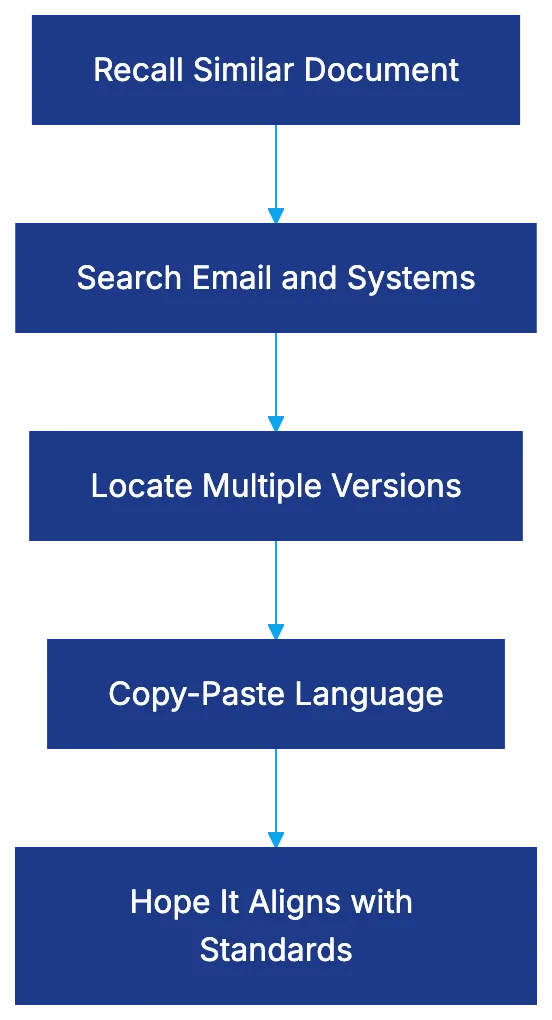
The Importance of Clause Libraries in Legal Practice
Explore how clause libraries enhance contract management efficiency and compliance in legal practices through standardized language.