
AI Contract Drafting Tools for Legal Professionals
Table of Contents
- Introduction
- How AI Contract Drafting Differs From Templates
- Conditional Logic Capabilities That Transform Drafting
- Spellbook: Legal-Specific Training Meets Practical Integration
- HotDocs: Enterprise-Grade Complexity Since the 1990s
- Gavel: No-Code Rules-Based Deterministic Automation
- Lawyaw and Clio Draft: Form Libraries Meet Practice Integration
- Legito: Enterprise Lifecycle Management and Collaboration
- Dedicated Drafting Tools Versus CLM Drafting Features
- Word and Office Integration: Why It Still Matters
- Training Requirements and Implementation Realities
- Accuracy Considerations and Quality Control
- Introduction
- How AI Contract Drafting Differs From Templates
- Conditional Logic Capabilities That Transform Drafting
- Spellbook: Legal-Specific Training Meets Practical Integration
- HotDocs: Enterprise-Grade Complexity Since the 1990s
- Gavel: No-Code Rules-Based Deterministic Automation
- Lawyaw and Clio Draft: Form Libraries Meet Practice Integration
- Legito: Enterprise Lifecycle Management and Collaboration
- Dedicated Drafting Tools Versus CLM Drafting Features
- Word and Office Integration: Why It Still Matters
- Training Requirements and Implementation Realities
- Accuracy Considerations and Quality Control
Introduction
Legal professionals must draft accurate contracts quickly due to growing caseloads. Traditional methods of manual drafting or using static templates can’t keep up with modern demands. AI contract drafting tools provide a solution by using advanced automation. According to a report by McKinsey & Company, AI is transforming the legal industry by automating routine tasks and improving efficiency. They range from simple field insertion to complex platforms using machine learning on billions of legal texts. This guide explains how AI legal drafting works, highlighting key differentiators among platforms.
How AI Contract Drafting Differs From Templates
Most attorneys are familiar with templates where placeholders like [CLIENT NAME] are replaced manually. AI contract drafting automates this process by smart field auto-population: enter a name once, and the system adjusts it contextually everywhere in the document.
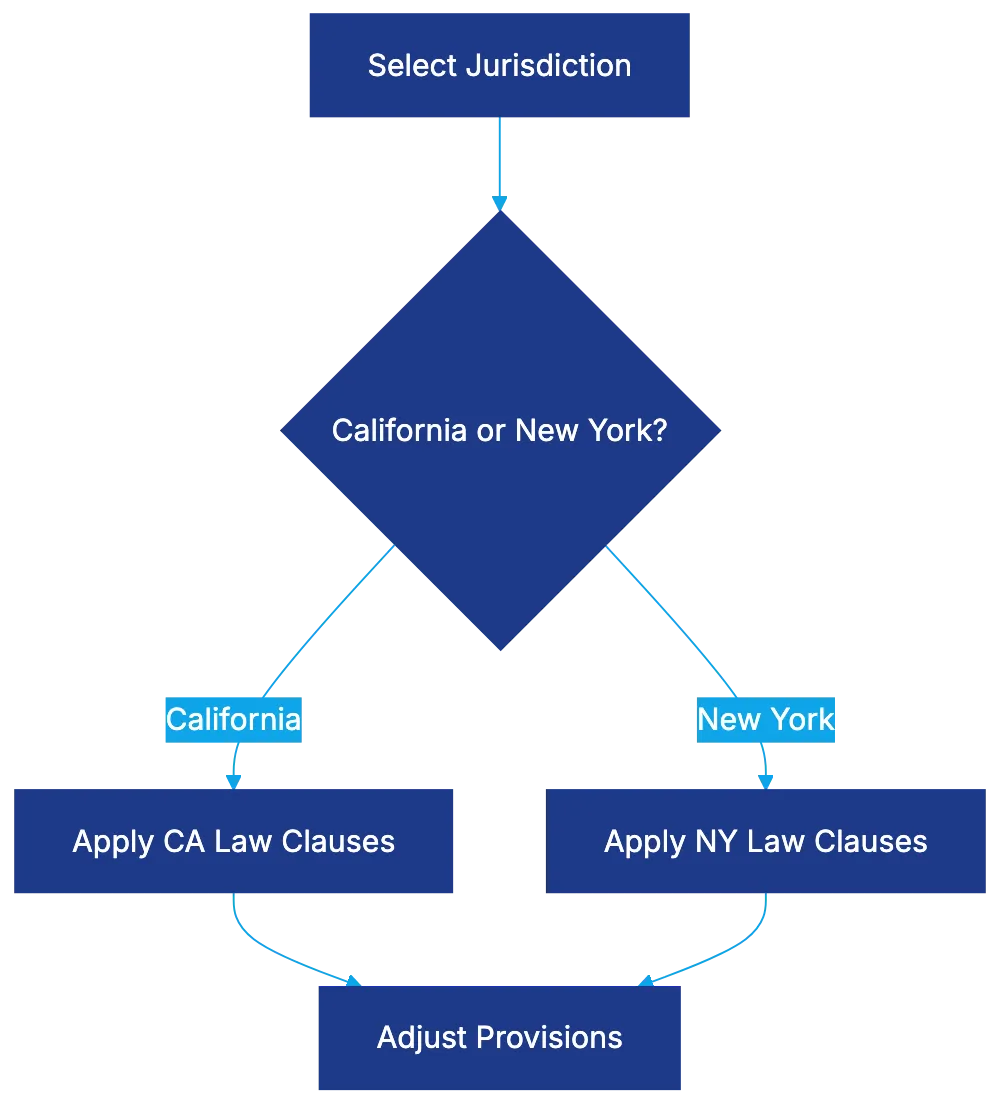
More importantly, AI document drafting uses conditional logic. Research from Stanford Law School highlights how AI can enhance legal drafting by incorporating conditional logic to tailor documents to specific jurisdictions. If you draft an employment agreement selecting “California” as the jurisdiction, the tool adjusts clauses for California law automatically. Platforms also integrate with practice management systems, pulling client data into drafts efficiently, improving accuracy considerably.
AI Contract Drafting Evolution:

Conditional Logic Capabilities That Transform Drafting
Conditional logic shifts drafting from convenience to practice transformation. It restructures documents based on deal parameters. For example, selecting a “SaaS delivery model” hides irrelevant sections while revealing others. Pronoun and verb agreement adjusts automatically based on party type and number. Nested conditions handle complex scenarios like indemnification clauses, and loops manage variable-length lists like multiple subsidiaries.
Calculations in drafting allow complex payment and earnout provisions to be automated, with the AI document drafting tool performing and expressing sophisticated results correctly.
Spellbook: Legal-Specific Training Meets Practical Integration
Conditional Logic in Action:
Spellbook leverages large language models trained on vast amounts of legal content. An article in the Harvard Business Review discusses how AI tools like Spellbook are revolutionizing legal document drafting by providing clause suggestions and flagging problematic language. It integrates with Microsoft Word, providing clause suggestions and flagging problematic language. Spellbook’s insights into industry norms improve drafting decisions. However, lawyers must verify language model outputs for accuracy and context.
HotDocs: Enterprise-Grade Complexity Since the 1990s
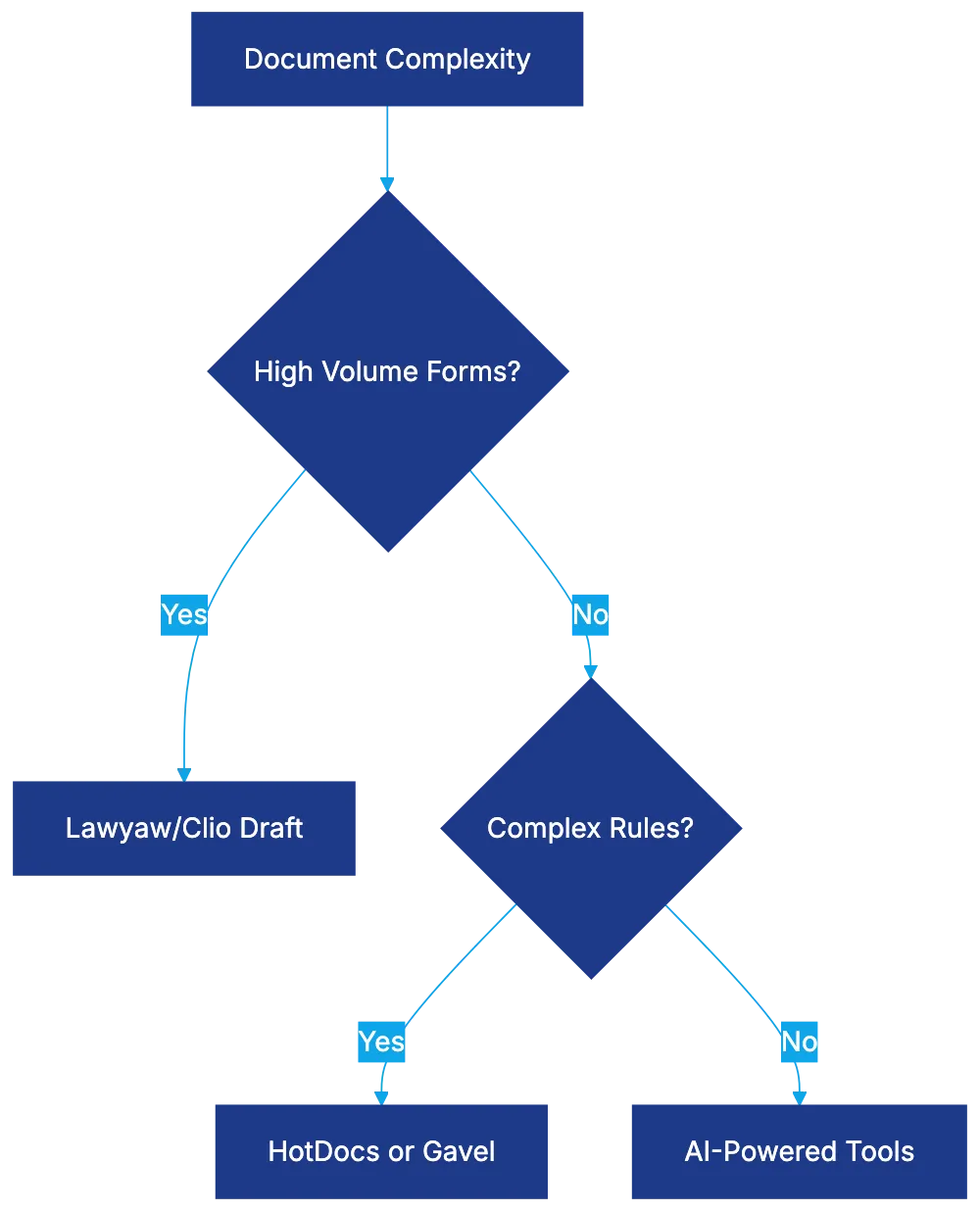
HotDocs has long pioneered legal document automation. According to a report by Gartner, HotDocs is recognized as a leader in document automation solutions for the legal industry. The platform expertly handles complex rules and calculations, managing documents with interdependent sections and detailed calculations, though requiring programming skills. Its maturity, security options, and enterprise-grade capabilities make it ideal for large firms.
Gavel: No-Code Rules-Based Deterministic Automation
Gavel uses deterministic logic for predictable results, crucial in high-precision fields. A case study by McKinsey & Company illustrates how deterministic logic in AI tools like Gavel enhances accuracy and reliability in legal document drafting. It offers a no-code interface, making complex automation accessible. It excels in handling high-volume, moderately complex documents, ensuring consistent quality and simplifying updates and testing.
Lawyaw and Clio Draft: Form Libraries Meet Practice Integration
Now part of Clio Draft, Lawyaw offers automated workflows for standardized legal forms. Integrating with Clio Manage, it streamlines document generation and integrates eSignature. This platform caters to practices with high-volume form-based workflows, with custom template libraries ensuring quality across firm drafts.
Platform Selection Guide:
Legito: Enterprise Lifecycle Management and Collaboration
Legito offers broader contract lifecycle management, incorporating drafting, negotiation, storage, and monitoring. Clause libraries and document negotiation features cater to complex commercial agreements, ensuring version control and stakeholder approvals through sophisticated workflows and integrations.
Dedicated Drafting Tools Versus CLM Drafting Features
Standalone AI contract drafting tools offer deeper document assembly capabilities than CLM platforms. While CLM drafting excels in integration and workflow management, dedicated tools provide sophisticated automation for more complex templates and high-volume document production.
Word and Office Integration: Why It Still Matters
Microsoft Word remains standard in legal document production. Native integration enhances adoption, though limitations exist. Cloud platforms that produce Word output balance automation power and compatibility, crucial for workflows needing seamless integration with existing systems.
Training Requirements and Implementation Realities
Implementing AI contract drafting requires training investments. Rule-based systems need more development time, while no-code platforms are quicker but less complex. Language models necessitate new professional judgment.
Consensus on standardization is critical before implementation. Change management should focus on workflow transformation, demonstrating clear benefits and addressing quality and responsibility concerns.
Accuracy Considerations and Quality Control
Quality Control Process:
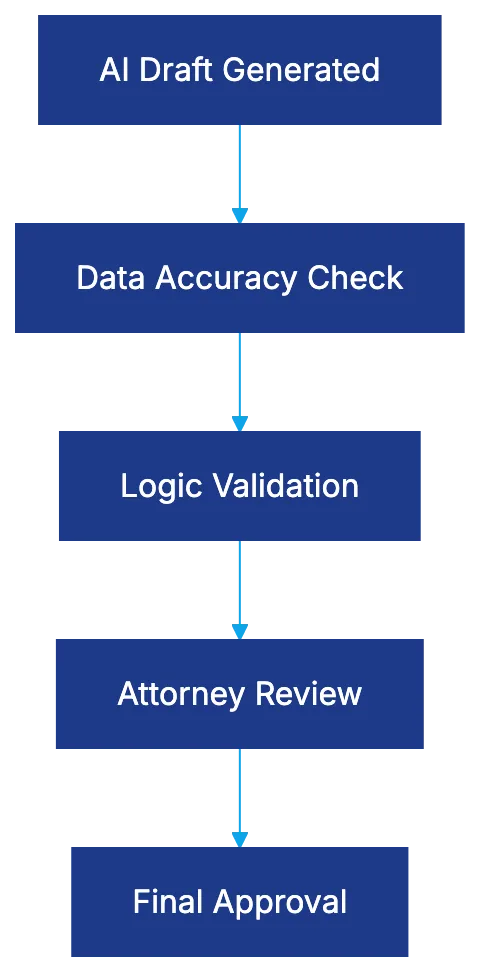
AI contract drafting accuracy varies by platform. Data transfer accuracy is usually high, but conditional logic depends on template quality. Language models require careful review for context versus rules-based systems.
Review processes should match the document’s complexity and value, maintaining professional responsibility with the attorney.AI contract drafting significantly reduces drafting time and improves consistency when implemented thoughtfully, choosing platforms meeting specific needs and managing change effectively.
Frequently Asked Questions
What are the primary benefits of using AI contract drafting tools?
AI contract drafting tools significantly enhance efficiency by automating repetitive tasks and reducing manual errors. They can also adapt documents to specific legal jurisdictions and manage complex clauses, ultimately saving time and improving accuracy in contract creation.
How does AI contract drafting compare to traditional templates?
Unlike traditional templates that require manual adjustments for each placeholder, AI contract drafting tools use smart auto-population and conditional logic to automatically adjust content based on selections made. This approach minimizes the risk of errors and increases the relevance of the document to the specific context.
Is AI legal drafting suitable for all types of legal documents?
AI legal drafting is particularly effective for documents that require standardization and have high-volume needs, such as contracts and agreements. However, for highly specialized or complex legal documents, a more tailored solution may be necessary to ensure all nuances are accurately captured.
What training is required for legal professionals to implement AI drafting tools?
Implementing AI drafting tools typically requires time and resources for training, particularly for complex rule-based systems. No-code platforms may demand less technical training, but users must still familiarize themselves with the system's functionalities to maximize its benefits.
How can I ensure the accuracy of documents created with AI drafting?
Maintaining accuracy involves a thorough review process that includes data accuracy checks, logic validation, and final attorney approval. Legal professionals should ensure that any AI-generated content, especially from language models, is carefully reviewed for context and compliance with applicable laws.
Can AI drafting tools integrate with existing legal software systems?
Many AI drafting tools offer integration capabilities with existing legal software and practice management systems, enhancing workflow efficiency. This integration allows for seamless data transfer and improved document management across platforms, providing a more cohesive work environment.
What factors should I consider when choosing an AI contract drafting platform?
Consider the complexity of your document needs, the volume of contracts you generate, and the level of automation required. It's also essential to evaluate the platform's integration capabilities, user-friendliness, and support for conditional logic to determine the best fit for your practice.
Related Articles

Ironclad's Unique Approach to Contract Management
Explore Ironclad's innovative contract management platform, emphasizing automation, AI, and seamless integrations for legal teams.

Understanding Contract Analytics Software
Discover how contract analytics software transforms legal agreements into actionable data for efficiency and insight.

Luminance Review: Transforming M&A Due Diligence
Discover how Luminance's AI revolutionizes M&A due diligence with advanced multi-language support and efficient document analysis.